Date: Fall 2022Team Lead: Benjamin LockIn-Engine Loop
Starfall is a third person action shooter wherein the
player must survive waves of increasingly difficult inter-dimensional adversaries using
Kuze’s machine pistol, daggers, clone, and dash.
I programmed a robust character controller in C# that enabled smooth movement on angled and
moving surfaces, movement displacement abilities, input mirroring via the clone ability, and
controlled a layer-based, IK equipped animation system.
Character Controller — In-GameLead UI/UX & 2D Artist: Erin O’ConnorMusic & Sound FX: Benjamin Lock & Nicklaus Loo3D · DRAG TO ROTATEKuze — Starfall Protagonist
3D · DRAG TO ROTATEMachine Pistol — Weapon Design
I served as team lead for a team of 20 talented developers who created Starfall,
conceptualizing the vision for the game and managing its development from start to finish.
I oversaw pipelines for programming, design, and art, planning milestones and deliverables
in accordance with Agile-Scrum requirements. Working across teams, and facilitating
communication between them, allowed me to utilize and reinforce my skills as a T-shaped
developer.
Starfall — In-Game
After technically designing and programming an extendable, designer-friendly, scriptable
object-based weapon system, I designed the player weapon and all enemy weapons. Gaussian
distribution algorithms were leveraged to enable variable bullet spread for both hitscan
and projectile-based weapons. A diverse and exciting array of weapons were created for
enemy use, spanning rockets, burst rifles, and heal rays.
Music-Reactive Shader
Starfall’s unique visual style hinges upon music visualization shaders, which use a
combination of vertex resolution, vertex displacement, and noise driven heat diffusion to
pulse and vibrate in sync to designated frequency bands of a song. I created these shaders
in Unity Shader Graph and programmed the system that discretized audio into eight frequency
bands, along with the system that would change shader parameters accordingly. I hand-tweaked
levels of sensitivity, in editor, to cement the style.
02
Vermillion Hearts
Date: Fall 2021All art, programming, design and writing by: Benjamin LockField Screen
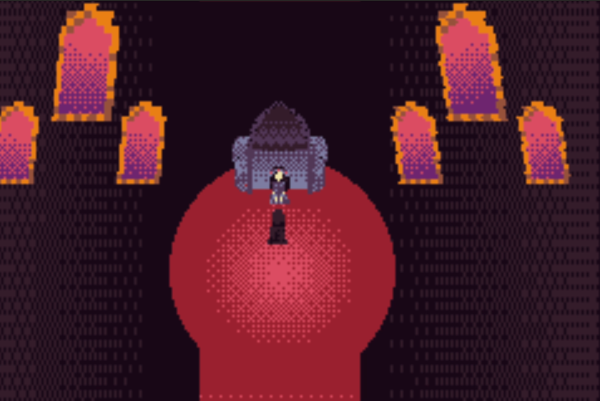
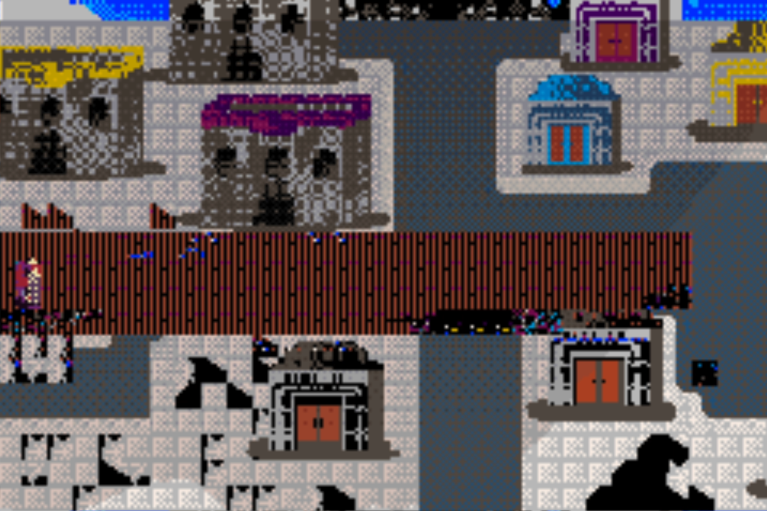
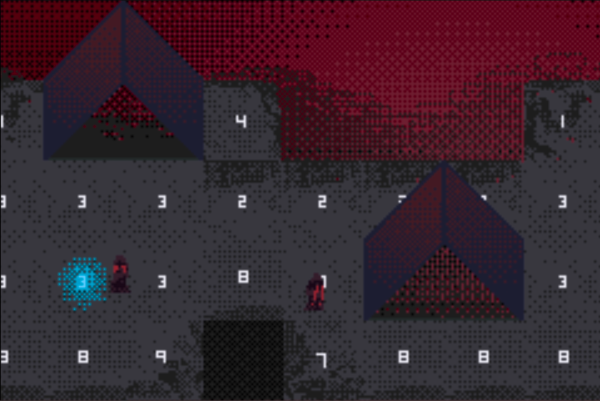
Vermillion Hearts is a short, experimental 2D
role-playing game created entirely in a custom C-based engine, built from the ground up for
Game Boy Advance hardware and emulators. I designed and implemented every element of the
game, from its collision map-altering abilities to a full conversation system. I leveraged
Direct Memory Access to create parallax backgrounds, authentic glitch effects, scrambled
palettes, and dynamic sound effects. Hardware interrupts drive player input and interaction
mode changes.
As the battery in the game’s cartridge begins to
corrode and die, what was once a traditional fantasy world begins to erode into something
more scattered and sinister. Characters become aware of their artificiality, the royal court
desperately searches for a solution, the streets of the kingdom fall away into garbled
static. I designed and implemented a sprite stealing mechanic that enables the player to
take the form of any character, and use their unique abilities to solve puzzles. Some
characters enable new conversation options, while others can directly alter the appearance
and traversable space of the world by changing the way collision maps are read.
OverworldOpening Sequence
Because the game portrays a deteriorating digital
world, I placed a huge emphasis on designing and implementing authentic glitch effects and
mechanics. Audio sample arrays are injected with random data to simulate decay, printed
characters have a small chance to point to other areas in memory, and backgrounds contrast
hand-crafted pixel art with flickering DMA swaps.
03
Star is Gone
Date: Fall 2020Team Lead: Benjamin Lock
DRAG_HEREStar is Gone — In-GameSilhouette StudyMusic & Sound FX: Benjamin Lock3D · DRAG TO ROTATEStar is Gone — ProtagonistIn-Game Sequence
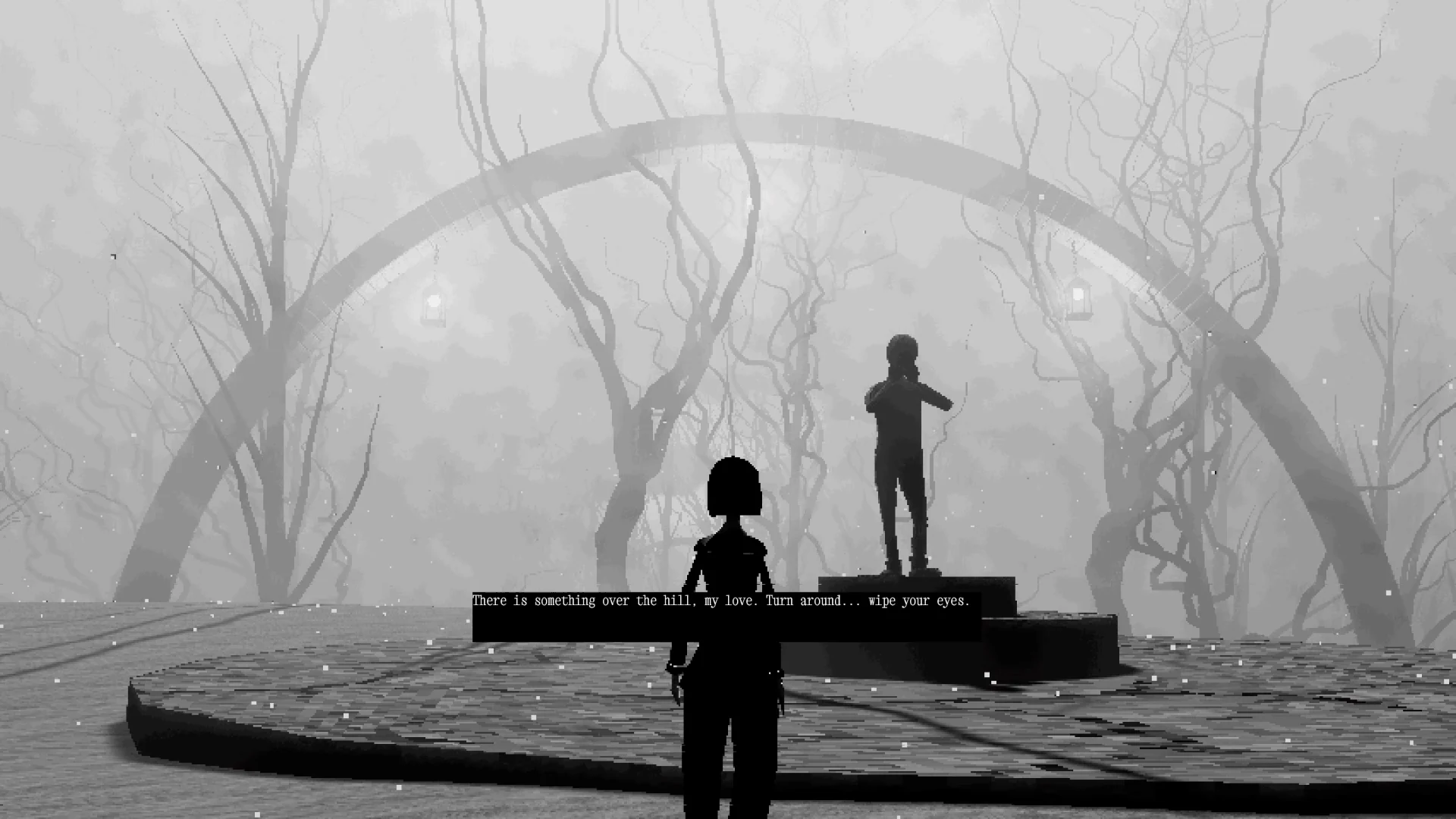
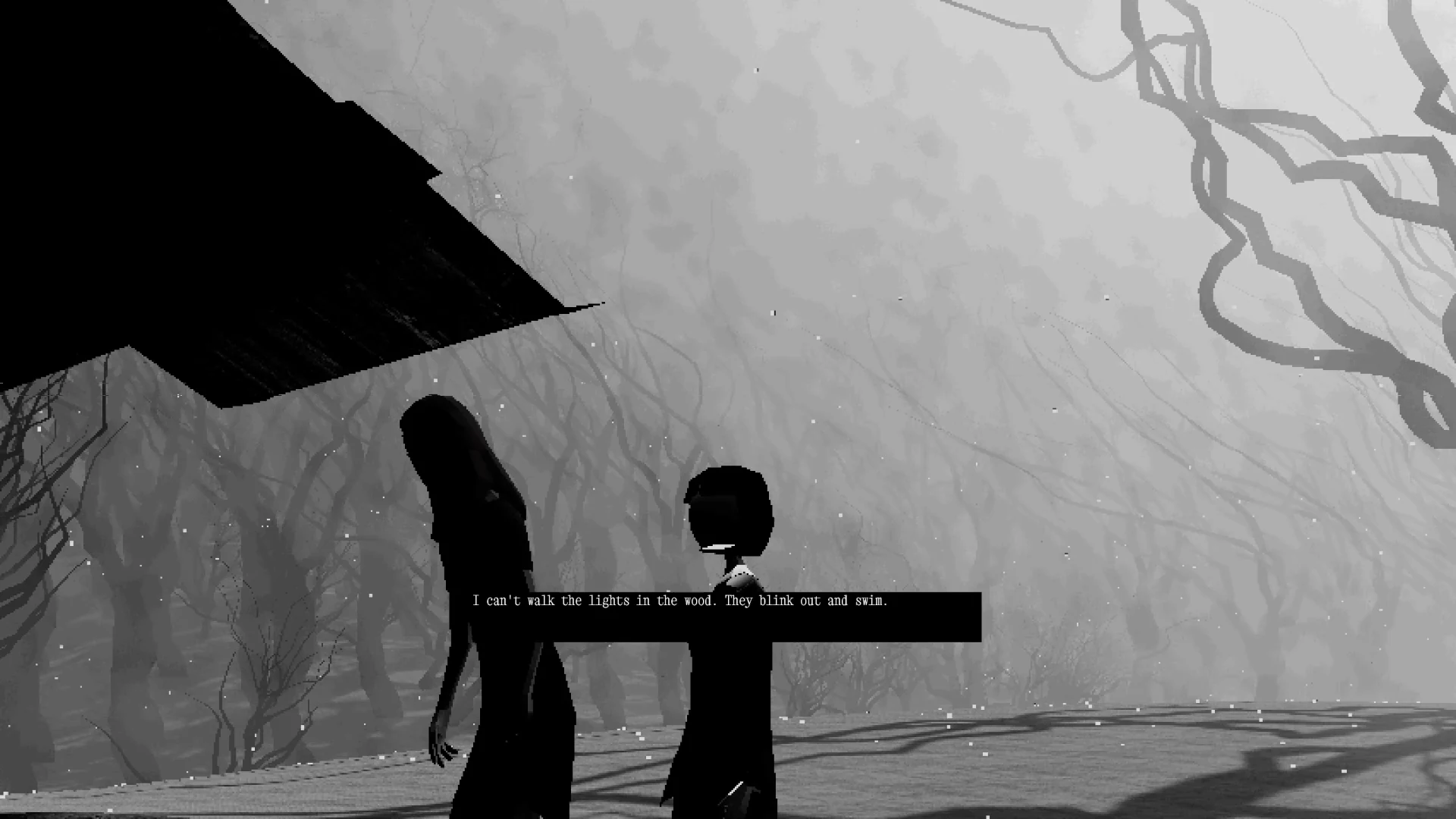
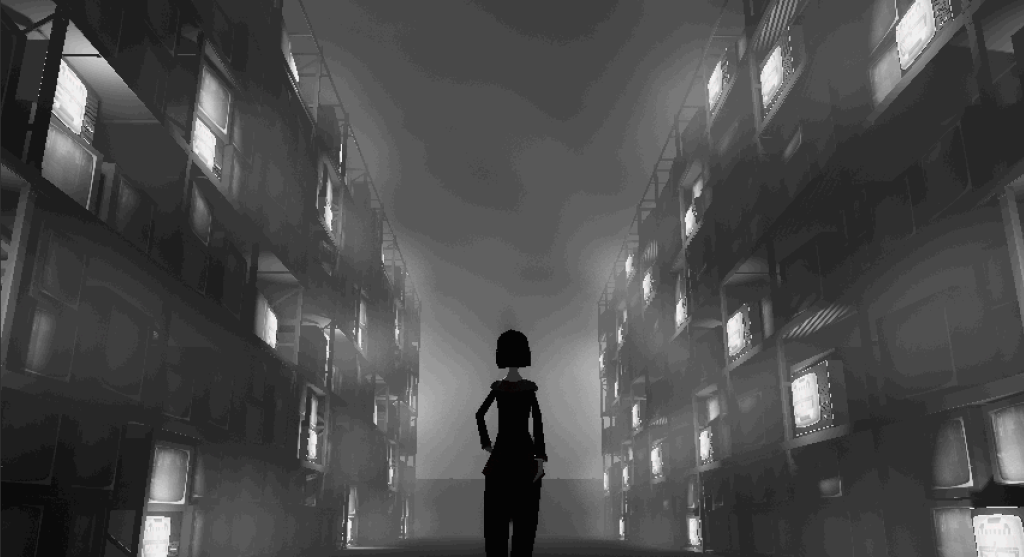
The player explores a dreamlike shadow of the waking world known only as ‘The Within
Place’. Scripted events, enemy AI, a dialogue system, and an open-ended design rule unite
to create a compelling, charming exercise in minimalism and eerie dread.
The Within Place
Benjamin Lock
About
My name’s Ben, and I am a Game Designer and Programmer. I’m a Georgia Tech alumnus
with a Bachelor’s of Science in Computational Media, focused in Games & Media.
I’m passionate about experimental games that push the boundaries of digital aesthetics
and interaction, and love working in teams to bring strong, unique visions to life. I’ve
led and delivered games for Georgia Tech’s VGDEV Club, and have programmed and designed
over ten games of variable scale in Unity and Unreal.
My project experiences span a diverse array of development roles, including programming,
design, technical design, producing, and working as a 2D and 3D artist. I’m proficient
in Unreal and Unity, along with C++, C#, Python and Java. I also have experience with Adobe
Creative Suite and 3D Modeling & Animation software.
Programming Languages
C / C++
C#
Python
Java
Tools
Unity
Unreal Engine
Adobe Creative Suite
3D Modeling & Animation
GBA Hardware
Experience
Rockstar Games — AI Gameplay Programmer, 2023–Present